
Teleporting Isn’t Allowed, But Joy Is: Bennani & NG in Conversation
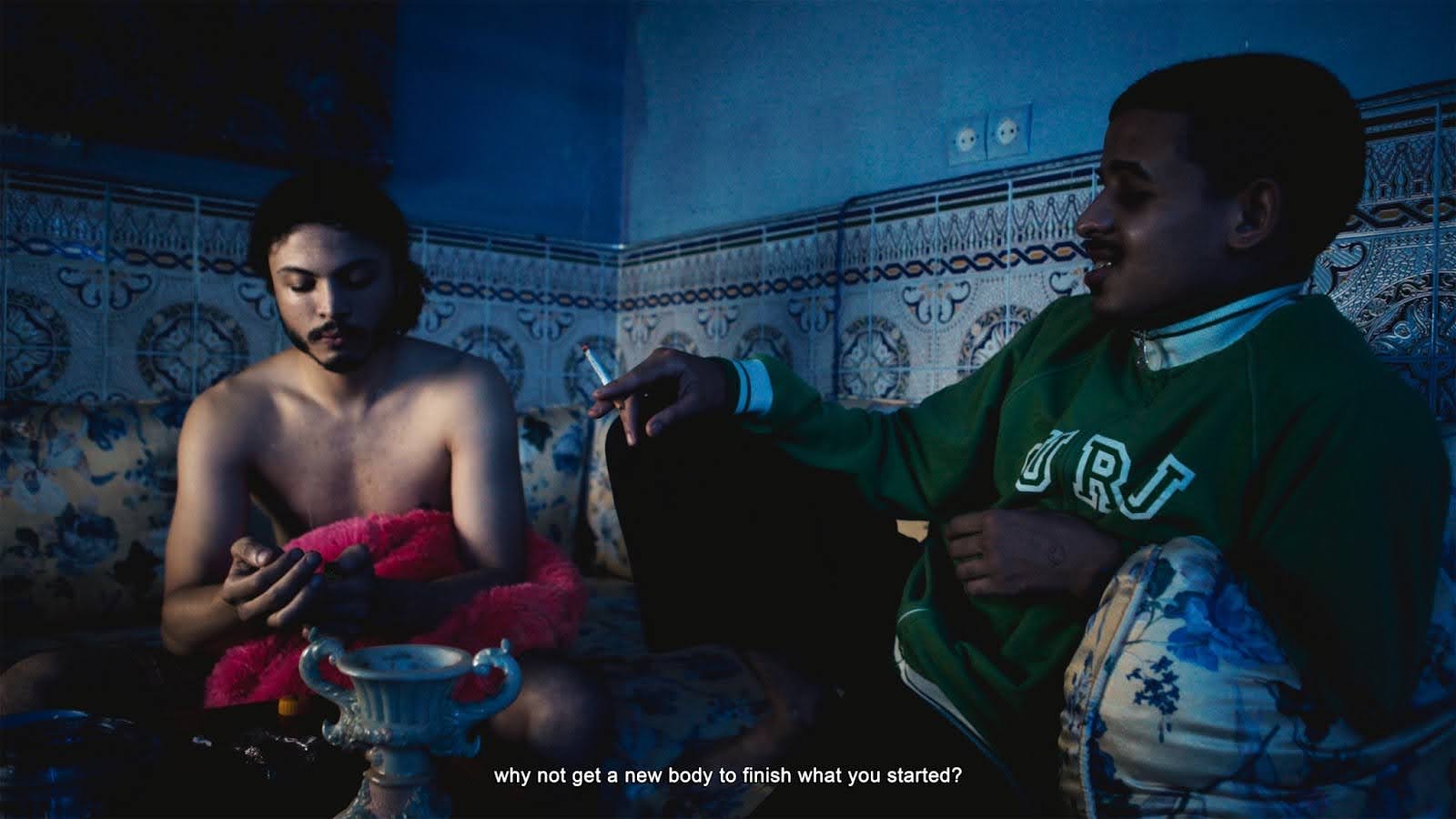
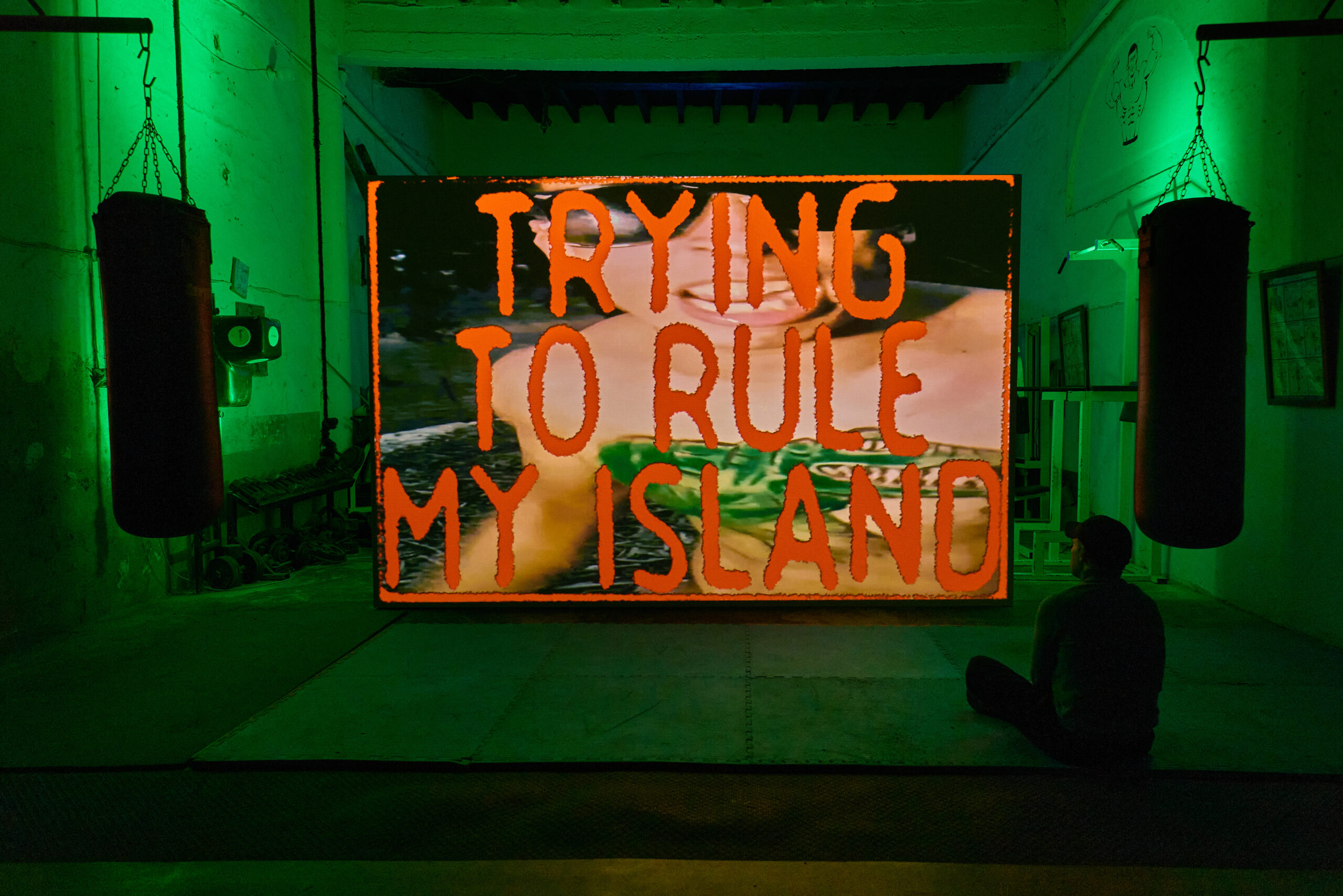
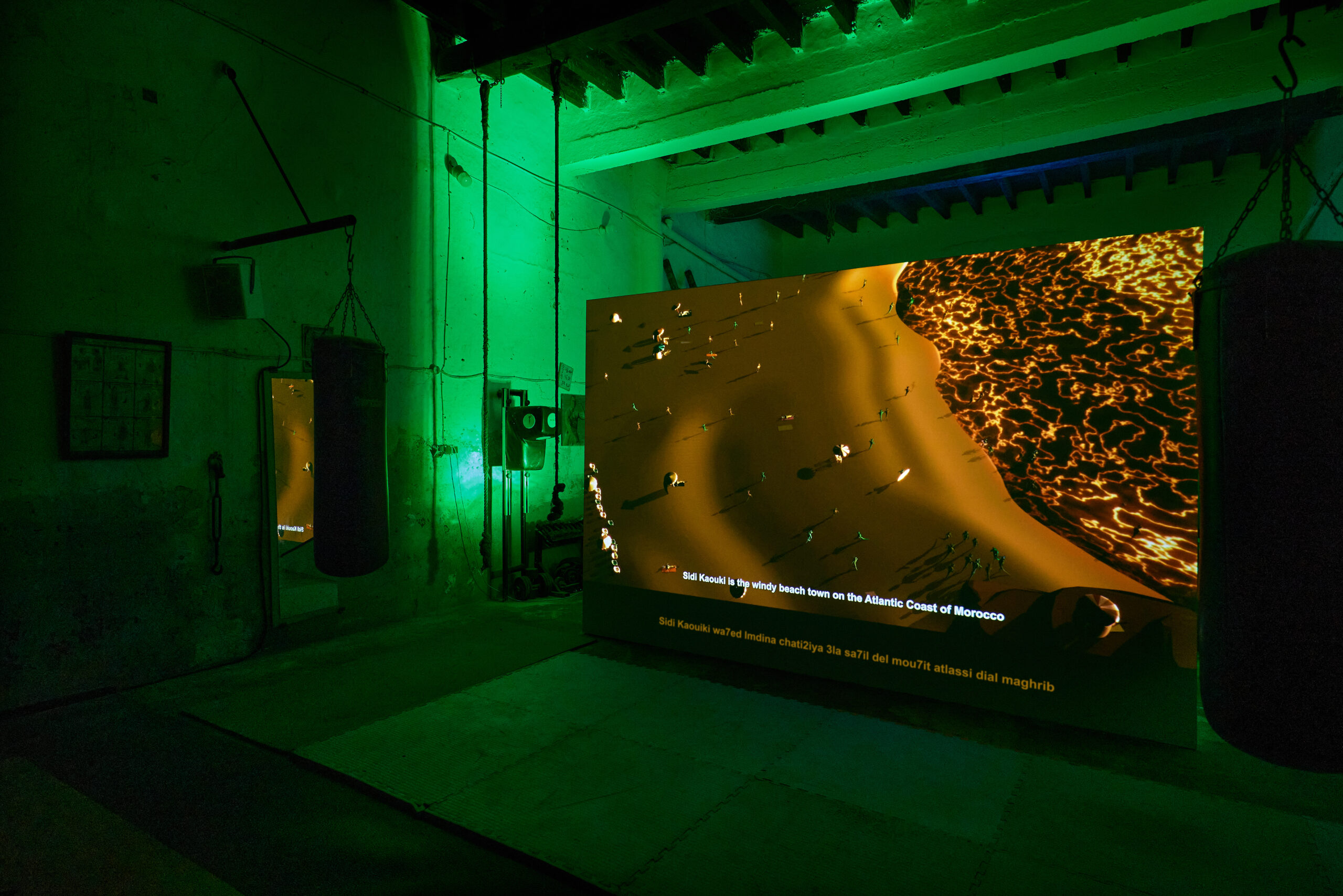
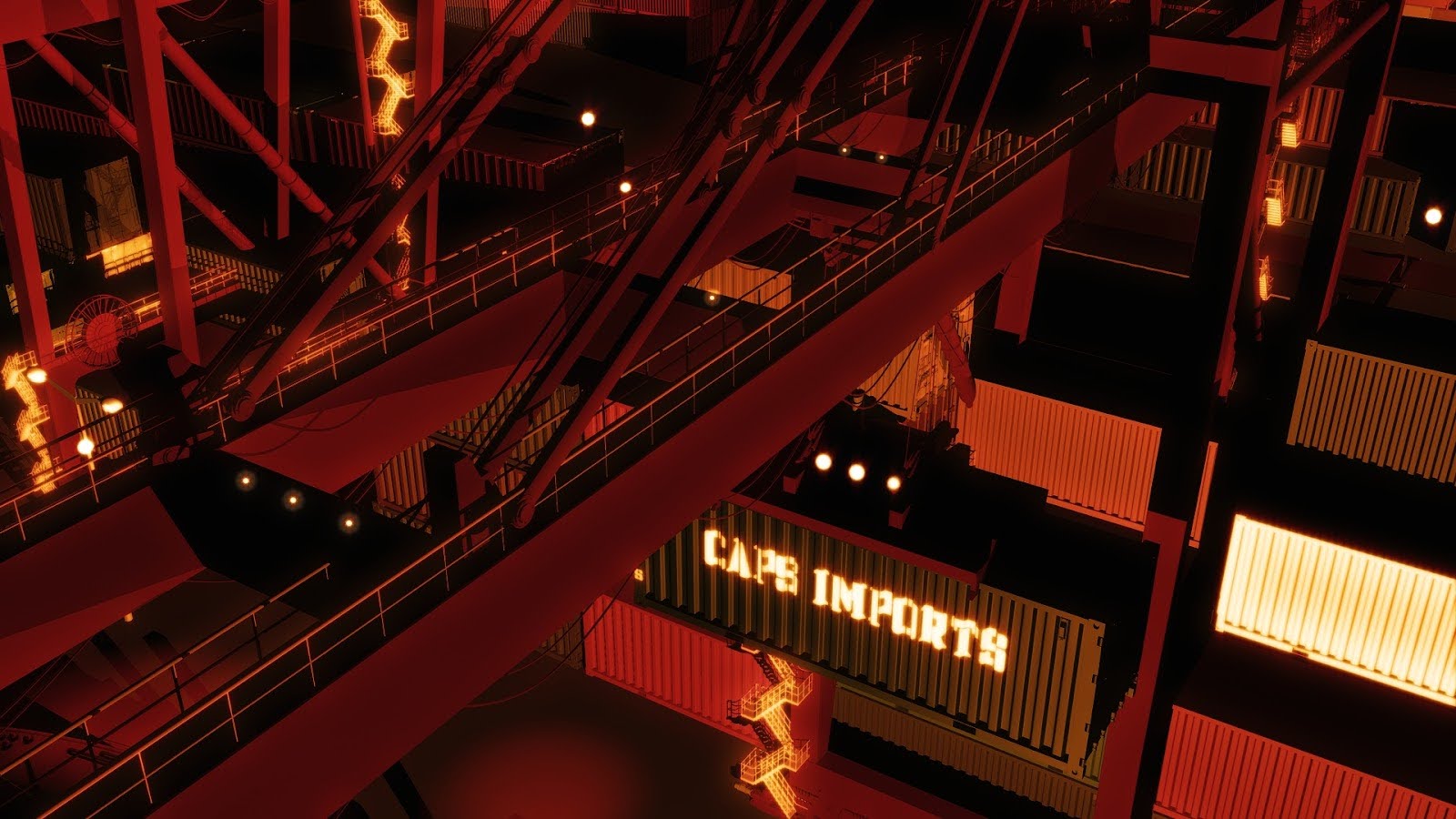
New York–based artist Meriem Bennani returns to Morocco with her first solo exhibition in the country, presented in Essaouira by NG, the new curatorial venture founded by former gallery directors, Nicolas Nahab and Samy Ghiyati. The show centres on Bennani’s celebrated sci-fi trilogy, a world where teleporting migrants are detained on a fictional island called ‘CAPS’, only to build new hybrid cultures, new humour, and new ways of resisting the systems watching them.
Interview by Daniel Obaweya and Saidat Animasaun
Images courtesy of Meriem Bennani & NG
October 2025
Blending live action, CGI, animation and the texture of pop formats (i.e reality TV, music videos, social media), Bennani’s films fold the absurd into the political without flattening either. Even shot partly in Essaouira, the trilogy sits somewhere between documentary and play-acting; a porous world where speculative fiction becomes a way to talk about today without pretending to predict tomorrow.
In this conversation with GIDA, Meriem Bennani talks us through showing in Morocco for the first time, as a chance to finally watch her work ricochet through the context it never fully left. Her ‘CAPS’ trilogy, lands somewhere between dystopia and inside joke; a space where parties, rumours, compression artefacts and joy are all equally important narrative tools.
Bennani and NG go on to reflect on the distance between home and “home,” on shifting away from the industrial pace of the white cube, and on why slow, intentional exhibition-making matters here. As Bennani puts it: “Sci-fi gives you just enough space to talk about what’s real.”
GIDA: Meriem, this is your first solo show in your home country of Morocco. What does that mean to you?
I don't think it's so much about going solo or anything. It's more about being able to have a show here, and for a long period of time, I think I'm going to get a lot of echoes from people who are seeing the work… I'm just really excited. You know, it means a lot. I feel like this is the video I've shown maybe the most. It's a trilogy. So the separate parts are all together. It's one of my works that has been liked around the most in the art world. But this feels a bit different, even though I've shown it many times. I've gotten so much feedback on it from multiple prisms, whether for its science fiction speculative aspect, for huge presentations or for its aesthetics. But I think, also, just to see, to understand how things will be perceived here in the Moroccan context is going to give me the full feedback, in a way. I also don't think it has to do necessarily with cultural specificity only, more so how, even from Morocco, this sort of thing is very distant. And that’s the function of the science fiction to bridge it together, right? So, I think, something like this would feel very culturally specific, in a way that people here will have a different understanding of it. But there's also distantiation that I think they will experience because of the Sci Fi aspect, and also because I don't live here.
Your new sci-fi trilogy unfolds on CAPS, a fictional island where migrants caught teleporting illegally are held. What features, environments, or visual cues did you build into this world to emphasise the tension and atmosphere of that setting?
I think, when working in the speculative, you establish the narrative - that’s how Sci-fi works. For example when you speculate ‘in the world, 1000s years from now AI has taken over…’, you're giving the rules of the world. And the rules are always a differentiation from something real happening today and the Sci Fi gives you enough abstraction, or it's a proxy to talk about it. And so I do that in the beginning of the CAPS. But at the end of the day, I don't necessarily explore what that does to people, because we're not in the future. I explore the people's lives that I'm filming today through asking them to roleplay and so there are dystopian aspects, but there's also a lot of Utopia, like choosing a party at the center scene, choosing things like joy as like resistance, showing that people will celebrate and they will have humor. You know, that's one thing, but then, it's about me hanging out with people today and giving them enough space to be playful with role playing and this whole sci fi thing, and giving them these prompts so that they can tell me about their life today.
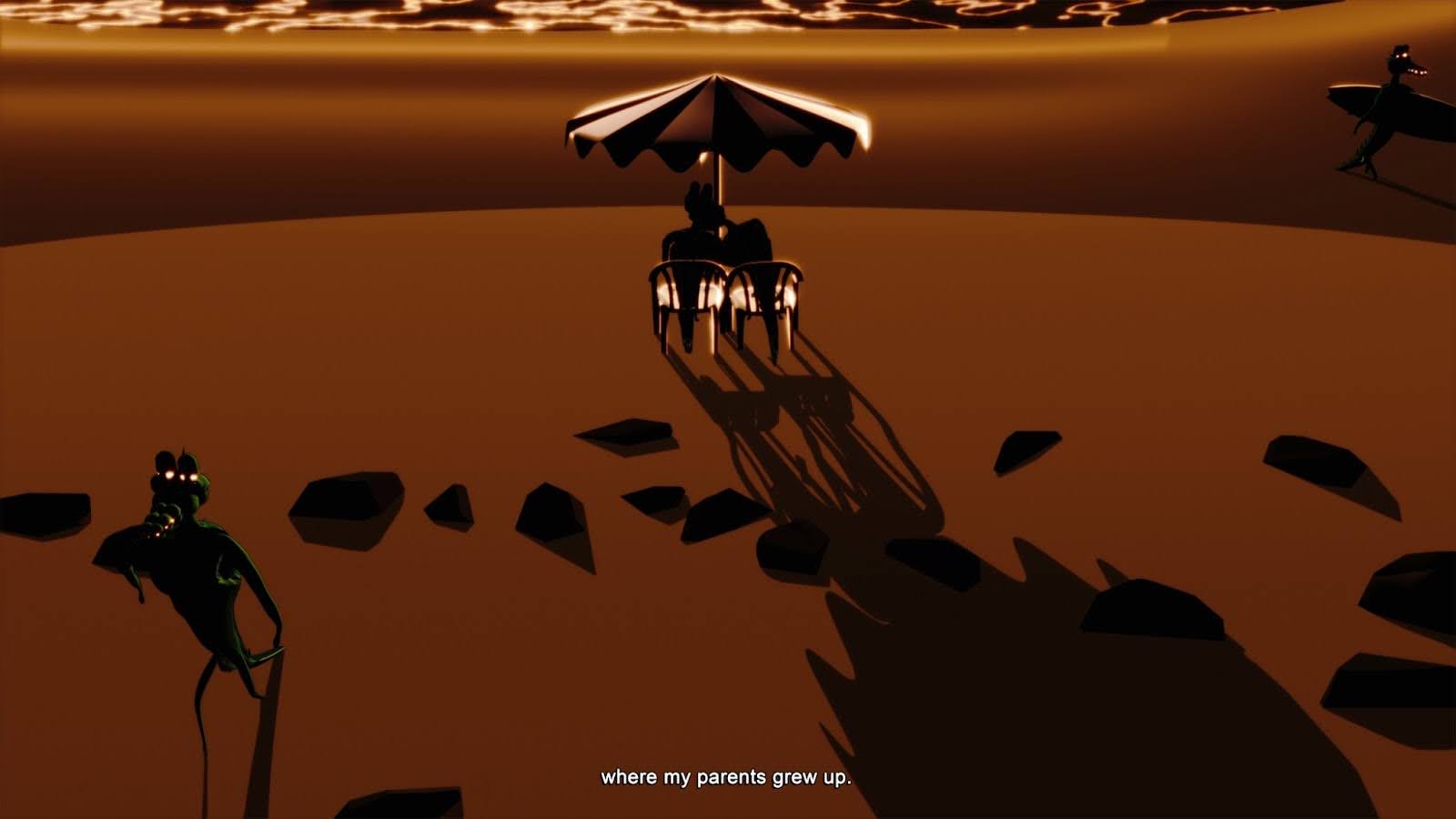
And what does CAPS stand for? Is it an abbreviation of something?
At first, when I was imagining the world, I was thinking of a half halfway capsule. And then I was thinking about how a capsule is something you know, that you isolate. And it's funny, because you could think it's the capital, and it's kind of a question: what is the idea of an center, right? So, no, it's CAPS, short for capsule, not capital, but in their world, is the capital, you know?
The book Map of Hope and Sorrow similarly highlights the stories of refugees fleeing violence only to become trapped in some of Europe’s harshest camps. When people encounter your work, what reflections are you hoping to stir? Which difficult truths are you drawing attention to?
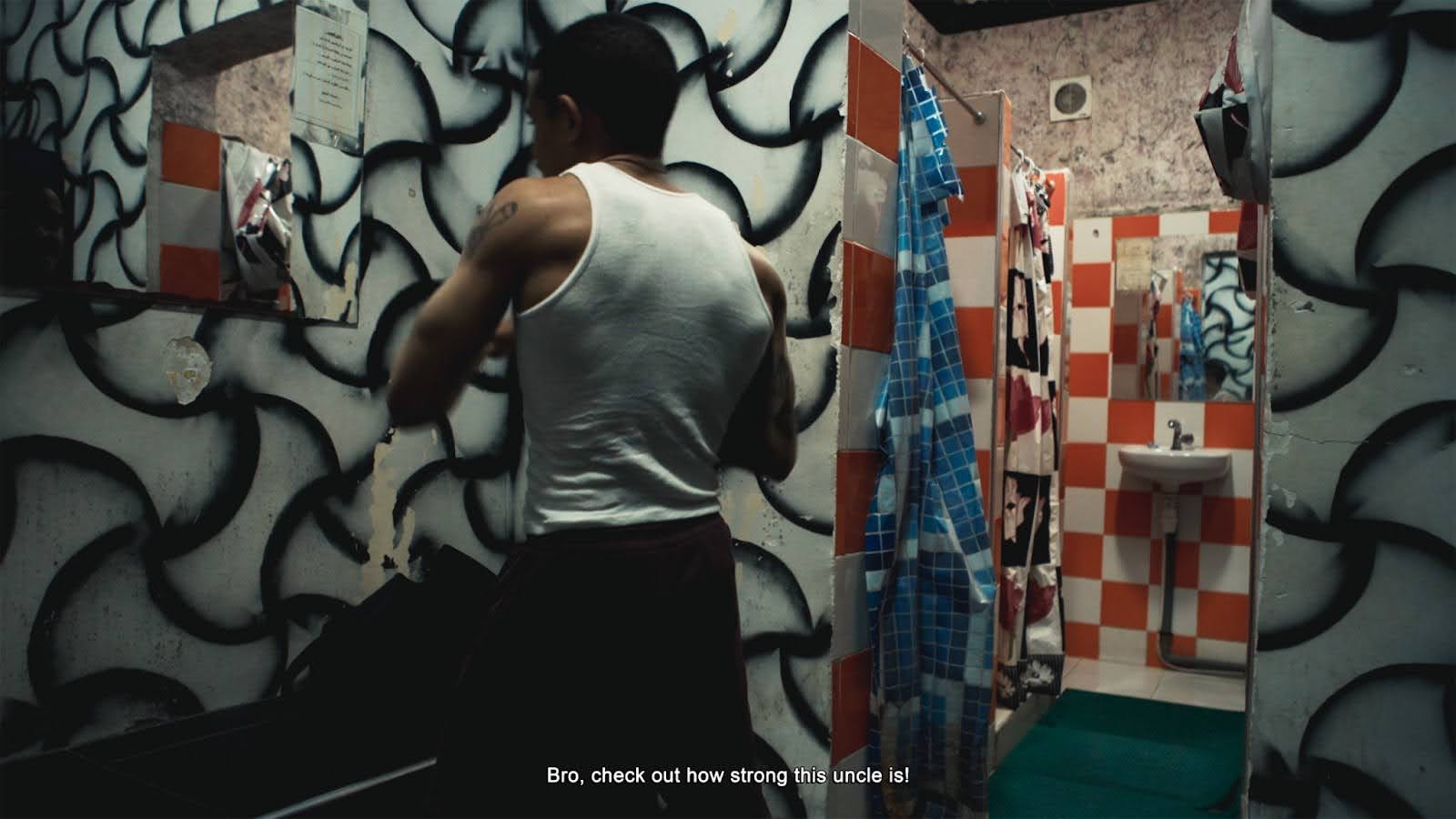
Similarly, it’s again a reflection on, like, on the people that I'm filming. But also CAPS is about the media. So yes, it's about people, but it's also about media circulation. And, it questions how media circulates and who has a monopoly over the media that defines the mainstream globally? and how so much media through internet compression is able to like travel, and then we actually see things that are coming out of Africa, and then being just like, regurgitated, reused and reprocessed, and like coming back, and, it's an endless loop. But everyone is producing it, but not everyone has a monopoly over how it circulates. And there’s also parallel ways for media to circulate, you know, in the continent that is just very interesting in how it creates culture. It's not just about the people and the gag of migration of people, but also the circulation of information.
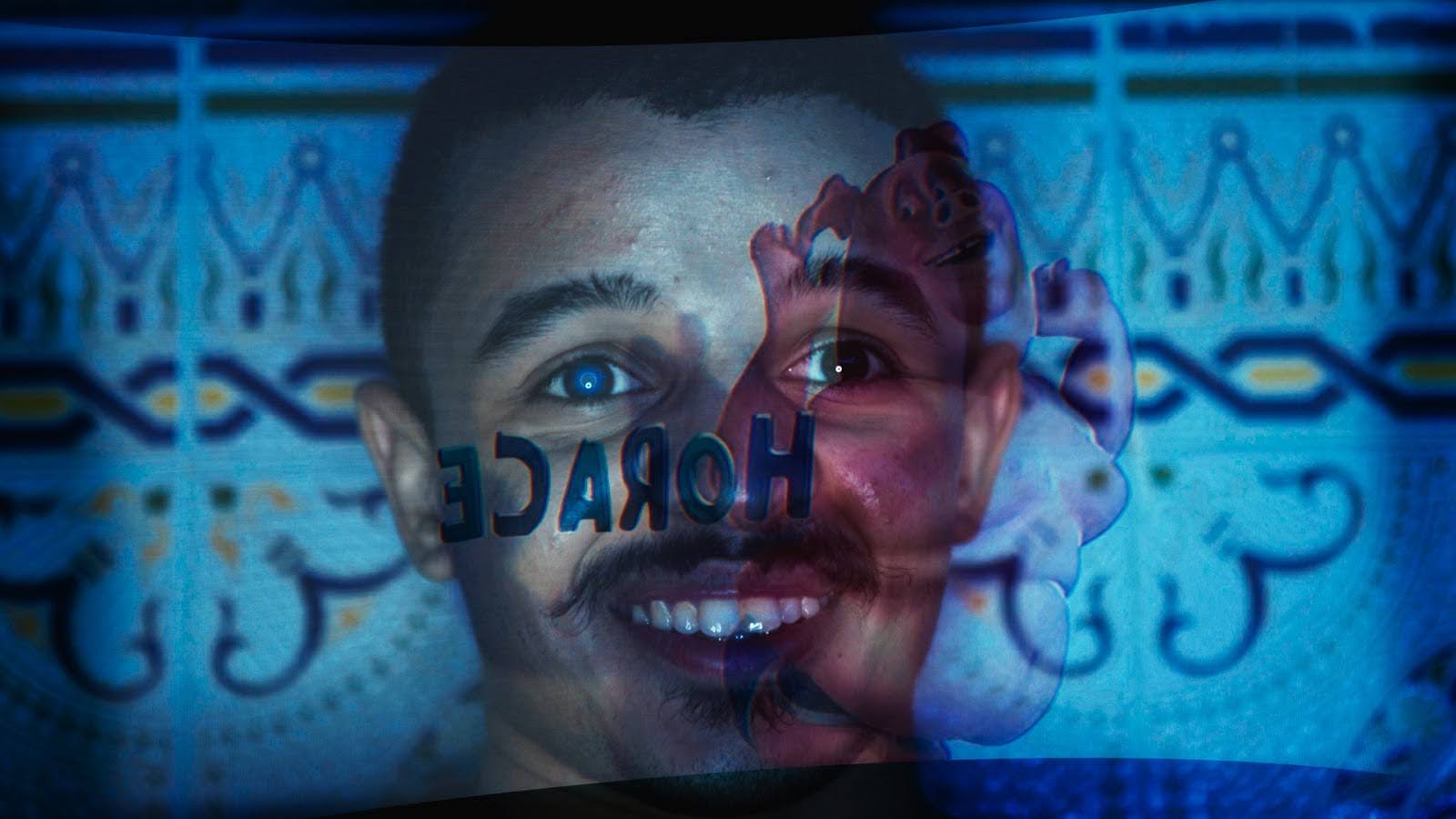
Telling migrant stories carries weight. Within your own personal context, how do you approach that responsibility? And have there been moments that made you pause and reconsider how you portray such layered and sensitive realities?
Yeah definitely. I think that's why I'm very specific about the kind of migration. There is an established idea of migration and being away from home, but it's not literally about migrant stories. It's about a diasporic feeling. And it's also about feeling diasporic, even without having left Morocco because of, like, the complexities of being there culturally and in terms of identity. So it's about me becoming diaspora, even though I grew up there (whereas now I've been away longer than living there). And so it's really about the idea of home, either as this place that is only existing as like a fiction, where you have this nostalgia towards but it's not a dynamic place. It's an idea that's fossilized and that you can only return to or stay in a new place and fully assimilate and be can then question if there is a third possibility in between. And that is what CAPS sort of stands for; this idea of keeping a dynamic relationship to home and understanding how it’s evolving through technology. It's like the culture is evolving, and you have to stay in touch, and understand it and that also makes you feel like you're far away. It’s all within the framework..
Nicolas & Samy you’ve both had long and quite illustrious careers in art, what made you set out to do your own thing and can you explain what NG is as an art entity *
NG has multiple axes, one of them is exhibitions, or rather artistic projects. The first one being with Meriem here in Essaouira. Samy and I worked for a long time in galleries. In the commercial space - and this isn't meant to be a criticism of the system - you make exhibitions on an almost industrial-like level, where it's back-to-back-to-back, and you have, on top of that, fairs and so on. So, the idea was that we don't have the need to be doing so many exhibitions. We only want to do exhibitions that have a meaning for both the artists and for us, and make sense also for the community they cater to. This show, and all the exhibitions coming up, are going to be bespoke, in carefully selected spaces that are part of the community around them and where people have easy access and feel welcome.
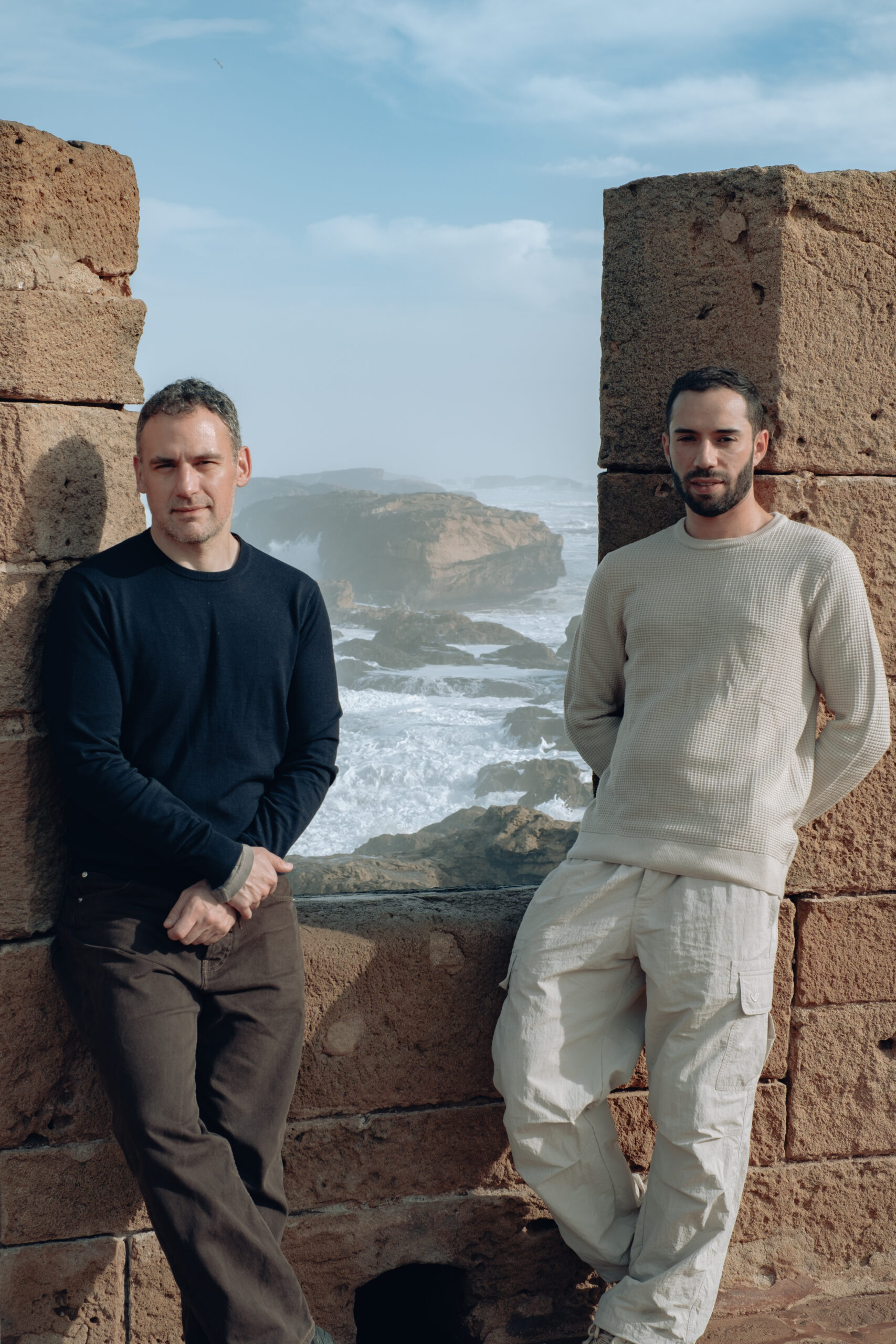
Both of you previously worked as senior directors in major commercial galleries, and this is your first public project. How has that shift been for you — moving from commercial-led planning to building programmes that are more community-focused and locally engaged?
Yeah, it's just finding sense in what you do. The art market is now a very standardised space in which you have to do a certain number of exhibitions in certain specific types of spaces. And it's kind of an ongoing cycle, between fairs, exhibitions at the gallery, museum exhibitions, and you lose kind of track of why you're doing things. And we've talked with artists that have had this type of same feeling that they were doing shows in the same type of cities, in the same type of spaces, and it kind of loses sense with them, making them question why are they doing it and it makes them feels disconnected from the community or the people they they want to reach with their artworks. We want to do something different here. We came to that conclusion out of conversations we had with artists who have said they want to leave the white cube and have exhibitions in places where there are no specific infrastructures and parameters.
GIDA © 2025