

Masculinity, Migration & Imported Traditions
Writing by Daniel Obaweya
Images courtesy of the designers
We speak to three West African CSM BA graduates on the inspiration, story and techniques used to create their final collections.
June 2025
As a visual researcher and big lover of fashion, Central Saint Martins has been in my consciousness for as long as I can remember, and so has its graduate showcase. I remember vividly how empowered and proud I was when I first saw Mowalola Ogunlesi's graduate collection, and how obsessed I was with finding and uncovering footage and pieces from some of my favourite designers like John Galliano and Stella McCartney. There is no doubt that Central Saint Martins, its facilities, and its tutors have helped shape the next generation of fashion talent, and this year is no exception. On June 4, 2025, they hosted their BA Graduate Fashion showcase, which featured forty unique and talented designers. Among these forty designers were three West African designers: Megan Alloh from Ghana, Zainab Mansary from Sierra Leone, and Timisola Shasanya from Nigeria. I had the opportunity to speak with the three designers who shared their personal experiences with migration. They discussed how these experiences shaped their collections, the techniques they employed, and their nuanced perspectives on masculinity and men's fashion.
Timisola Shasanya
I would like to go back a little before we discuss your graduate collection; you have a profoundly personal, nomadic story that spans Ireland, London, and Nigeria. What did you pick up from those places, and how did those elements seep into the collection?
Memory and the passage of time are central to how I navigate the world as someone who has lived continentally. Being an Irish-born, Nigerian-British, Black woman, my experience of migration isn't just geographical, it’s deeply emotional. My work emerges from a layered perspective, where movement is not just about crossing borders but about transformation, preservation, and the constant negotiation of identity.
This collection is rooted in my personal migration journey between England and Nigeria as it explores how physical relocation shapes an individual and how materiality holds memory. Migration is often seen as one-directional, but my experience is more fragmented and fluid. It’s about collecting fragments from each place and reinterpreting them, carrying the textures, visuals, and emotional resonance of these environments into my work.
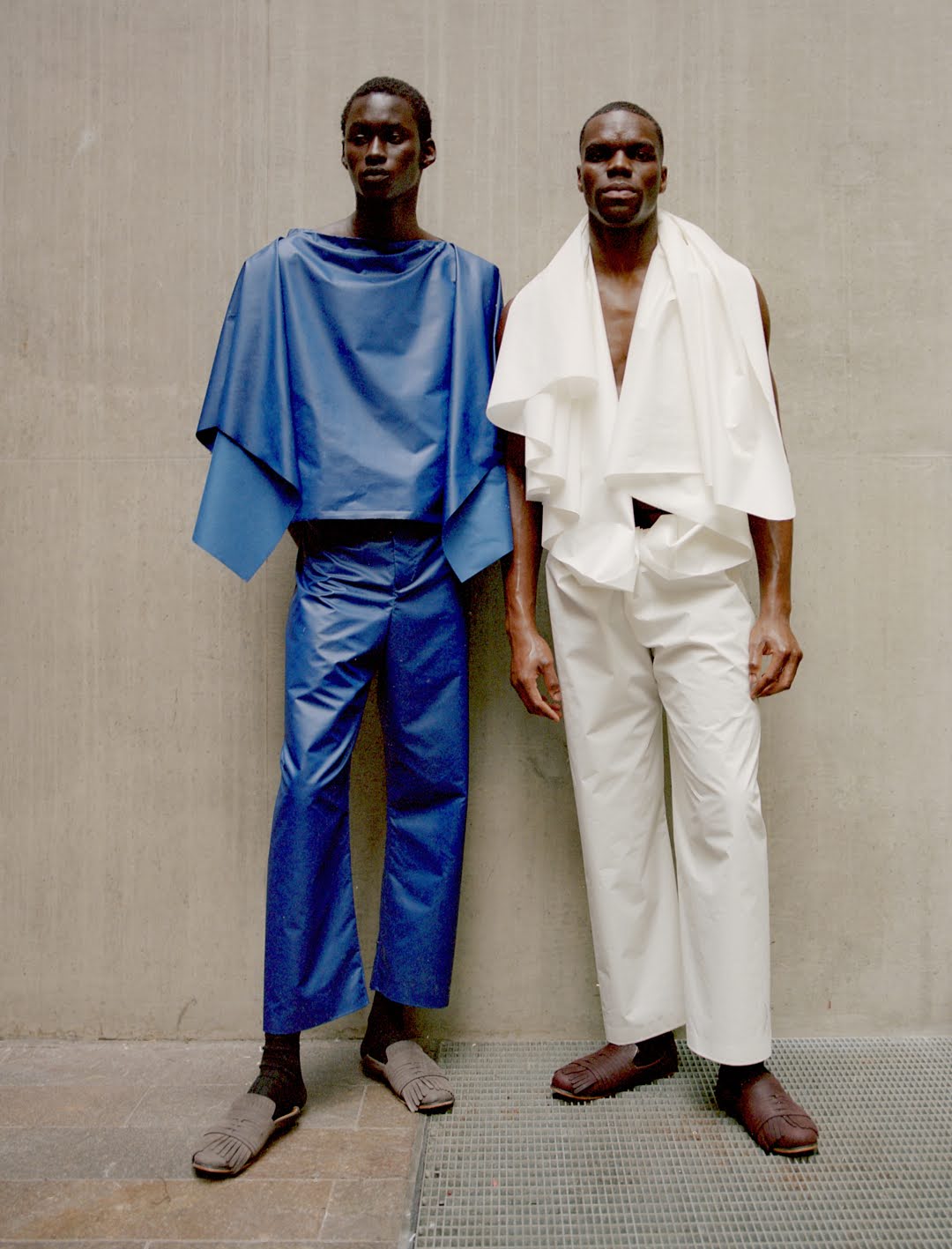
Each location I’ve lived in has left a distinct imprint. From my time at boarding school in England, I referenced the Barbour jackets I wore, which fueled my decision to use waxed cotton as a medium in this collection. It depicts symbols of British tradition yet merges the tradition of wax print within Nigerian textiles. Lagos, by contrast, is filled with vibrant artistic energy. I was constantly surrounded by beauty at home, from the woven chairs and baskets on the roadside to the rich portraiture and textured materials in my grandfather’s house. That environment shaped my sensitivity to craft, detail, and material storytelling. It's what led me to direct textile and material research in Kano, Northern Nigeria.
Nigeria gave me a profound appreciation for artistic value, an instinct to see meaning in the everyday and to embed emotion into texture. London helped me situate my practice within a global context, sharpening my research-led approach and teaching me how to strive for modernity through tradition.
I love the name of your collection, 'Runners'. I know it originated from a fabrication technique that you frequently employ. Still, it's also a bit of a double entendre because, in some ways, migrants are indeed running and escaping to start a better life. Could you describe the fabrication method you employed and explain your choice of the term "Runners"?
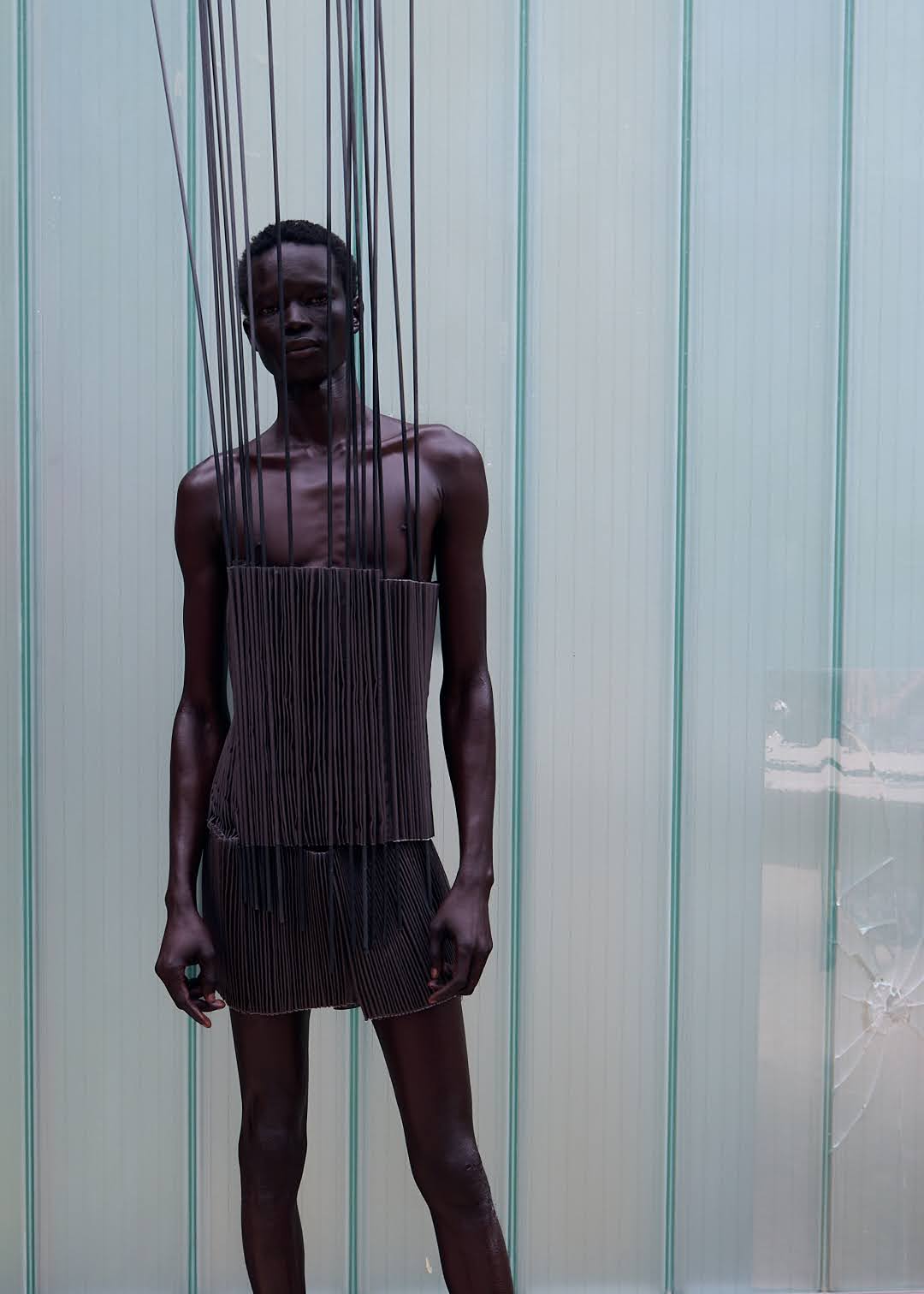
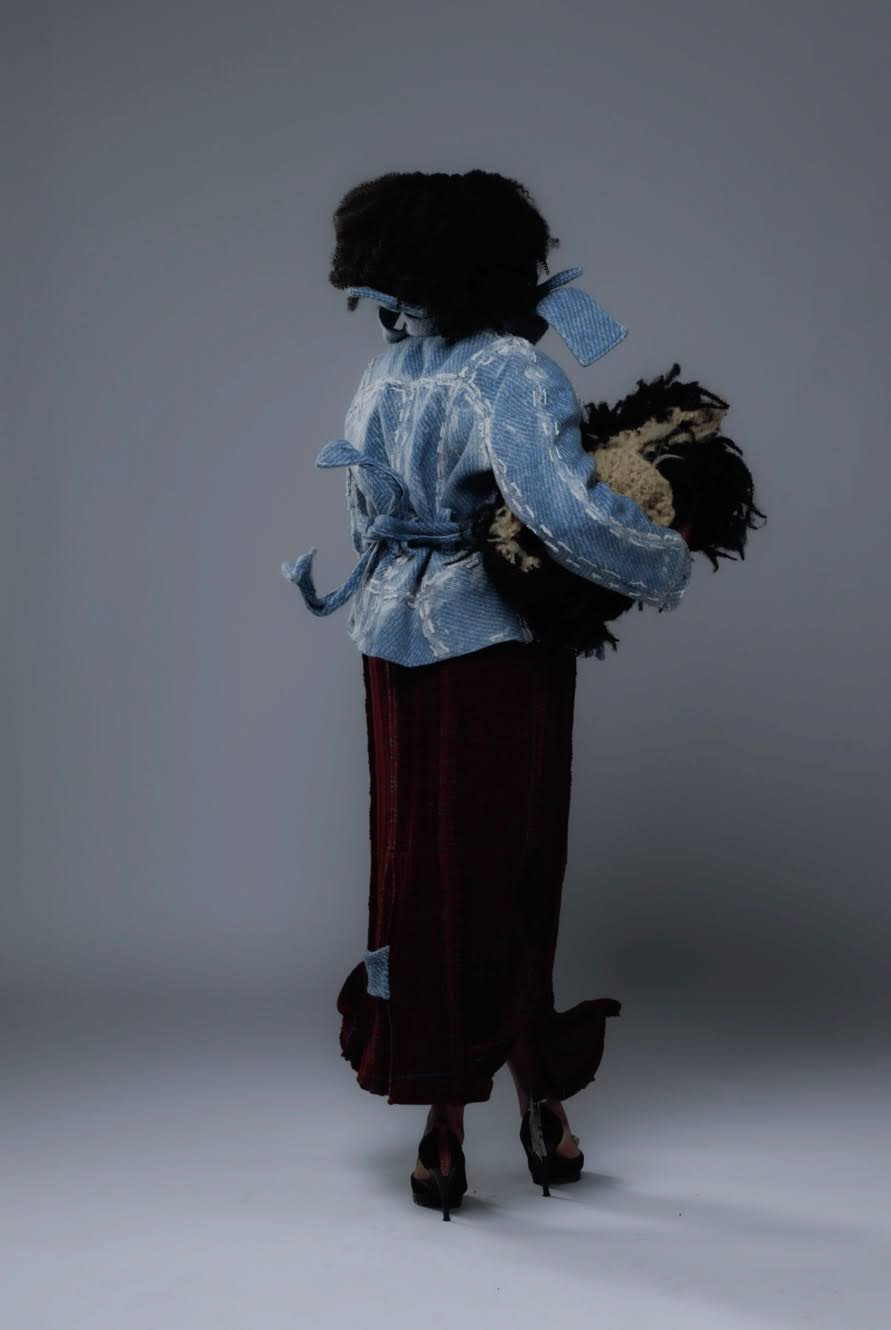
The name Runners originally came from a fabrication technique I developed during my first year White Show project, where I was researching the lives of housemaids in Lagos and the complex, often painful, power dynamics between them and their employers, or ‘ogas’. That research was rooted in firsthand accounts from older individuals reflecting on their younger selves, as well as the experience of a houseboy I knew growing up in Lagos. To deepen the narrative, I embedded actual broom bristles into the fabric as brooms are everyday household objects used for cleaning, but in many cases, they are also tools of discipline and violence. I wanted to reclaim and reframe them, using the same materials associated with pain to construct something beautiful. Each stitch, each embedded broom, is intentional and layered with memory, labour, and a confrontation with overlooked histories.
The name itself was first coined by my tutor during a tutorial, when he tried to explain how I could technically embed the brooms into the fabric. He said, “You need to stitch them in like runners.” At the time, it was just a technical term, but it stuck with me. Over time, the word took on a new meaning. Runners became a metaphor for movement. People often view migrants as individuals fleeing hardship, instability, or seeking a better life. For me, that sense of running isn't just about fleeing; it's also about transformation. The name reflects both the literal construction of the fabric and the deeper themes of migration and memory. It’s about how material can carry pain and beauty simultaneously and how something as humble as a broom can hold a world of meaning when you look closely enough.
You recently worked for the Italian fashion house Ferragamo. What was it like working there and living in Florence, a city with a long history of welcoming and integrating immigrants?
Florence was beautiful, and moving there was both daunting and rewarding. Coming from London, a city that’s vast and fast-paced, Florence felt small in comparison, but it was so rich in history, art, and culture. There’s a certain stillness and elegance to the city, and despite its size, it holds a layered narrative of migration and artistic exchange that I found grounding.
Working at Ferragamo under Maximilian Davis was honestly a dream. I had admired his work for years, not just for its elegance and precision, but for how he navigates identity and heritage through luxury. Being able to work under a young Black designer at the height of his career so far was incredibly affirming. It felt powerful to be in a space where representation wasn’t just symbolic, but visible and shaping the future of fashion.
That experience gave me a new level of insight into craftsmanship and discipline. It also reinforced my own belief in the importance of cultural storytelling, whether in the quiet beauty of Florence’s architecture or in the bold, intentional design language that Max brings to Ferragamo. It was a period of growth, not just professionally, but personally, as being far from home and navigating a new city, taught me to trust my voice in new environments.
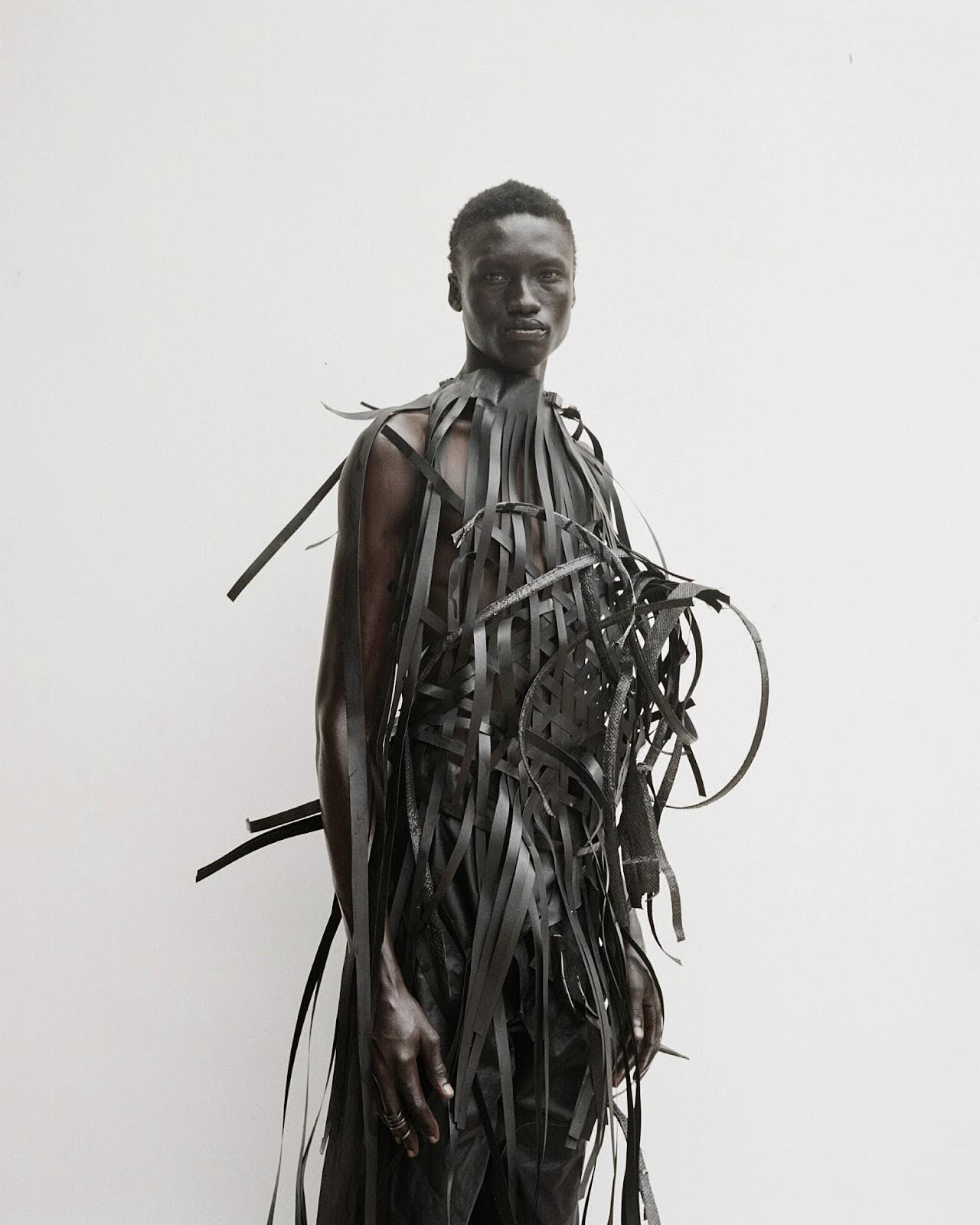
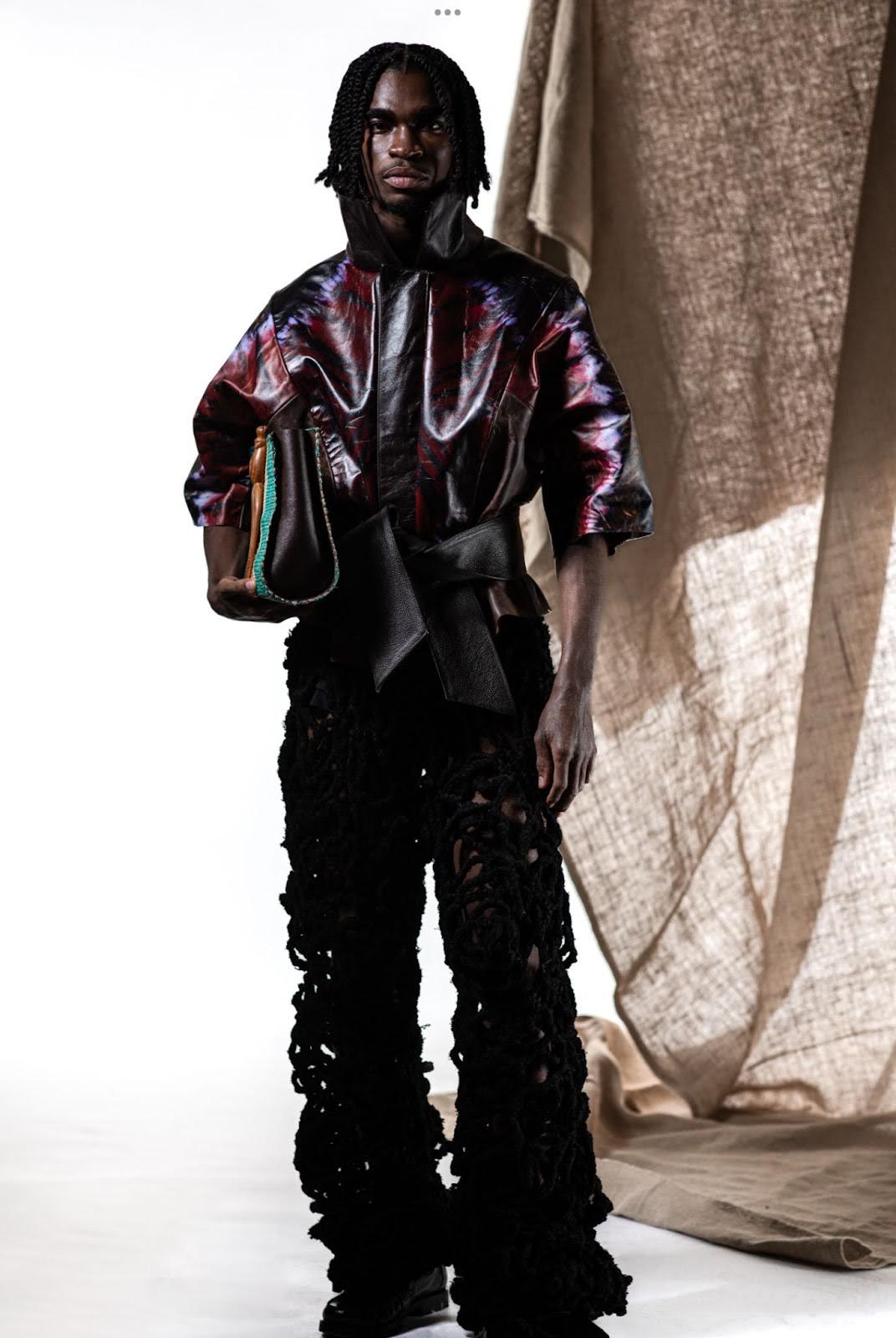
Timisola, the intensity in looks one and five is striking. Could you elaborate on your creative process for those pieces? It's clear you intentionally challenged conventional menswear forms, which is a significant aspect I'd love for you to discuss further.
Both looks began not just as garments but as sculptural investigations, rooted in my process of material transformation. Textile development is usually my starting point. For these pieces, I began with materials from my immediate surroundings: waxed cotton, metal fragments, and a tarpaulin bag from my father’s farm. Through a process of manipulation, I transformed those materials into something that emulates leather, industrial yet intimate.
Craftsmanship is central to my practice. It’s not just a technique; it’s the soul of what I do. I draw heavily from my heritage, embedding echoes of memory, spirituality, and craft into every stitch. Unorthodox materials, such as brooms from my childhood home or industrial wax, become tactile poems. They provoke and seduce the very idea of form, challenging how we define menswear and the body it dresses.
Designing for dark skin is also intrinsic to my work. I develop surface treatments and codes that interact intentionally with the depths of our skin. Each look carries the weight of sensitive research distilled into something deeply personal. When placed on the body, these pieces shift and become living sculptures, vessels for memory and transformation.
Ultimately, I want my work to stand on its own, yet vibrate even more fiercely when worn, a tension I return to again and again.
What’s next for you?
To travel, I want to continue exploring places and cultures, especially within Africa (Senegal, Morocco, Benin, etc). The history and tradition in our continent is vast, especially in the textile industry. I also see myself at peace, creating with intention, whether that's within a brand, consultancy, or my practice. I'm pushing my perspective forward, telling stories that resonate, and working on projects that feel true to me. Fulfilment, not just visibility, is the goal.
Megan Alloh
Could you tell us about ‘Imported Traditions’ and the story behind the collection?
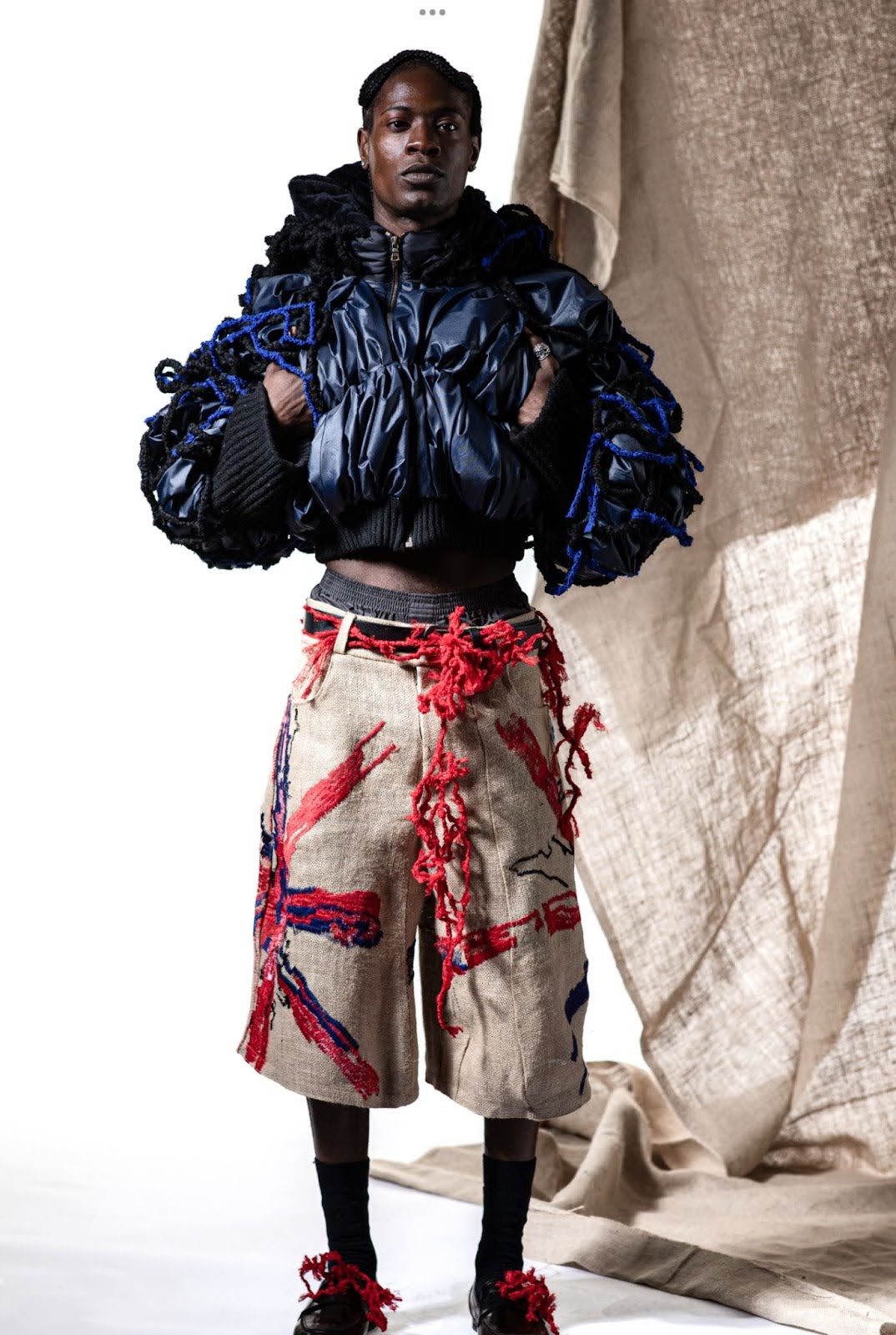
Stockfish was the starting point of this collection. A Norwegian delicacy, stockfish, is highly valued in West Africa and is widely used in West African cuisine. Discovering this made me question what other traditionally European goods and customs have made their way to the African continent, blending seamlessly into everyday life and becoming what I now call “Imported Traditions”.
This collection explores the hybridity between Europe and West Africa, with a specific focus on the cultural exchanges between Britain and Ghana. It reflects on the traditions my family carried from Ghana and the European influences I’ve inherited as a black Brit.
As the work developed, the theme evolved into something more conversational—a jumping-off point for a broader exploration of blackness in Britain. It became an inquiry into what it means to grow up in a country that played a role in the disenfranchisement of your own, while navigating the complexities of identity, adaptation, and belonging.
I wanted to create a visual representation of what I believe blackness in Britain looks like. I asked myself: if a group of friends with similar lived experiences and socioeconomic backgrounds were getting ready for the same event, what would they choose to wear? How would they style themselves? Would their hair be the focal point? Would one item take centre stage as the statement piece, or would they opt for something understated, like a simple two-piece set? These questions shaped the design of each look in the collection.
You utilised the Ghana Must Go bag pattern as a recurring motif in your collection. What other techniques and fabrication did you employ?
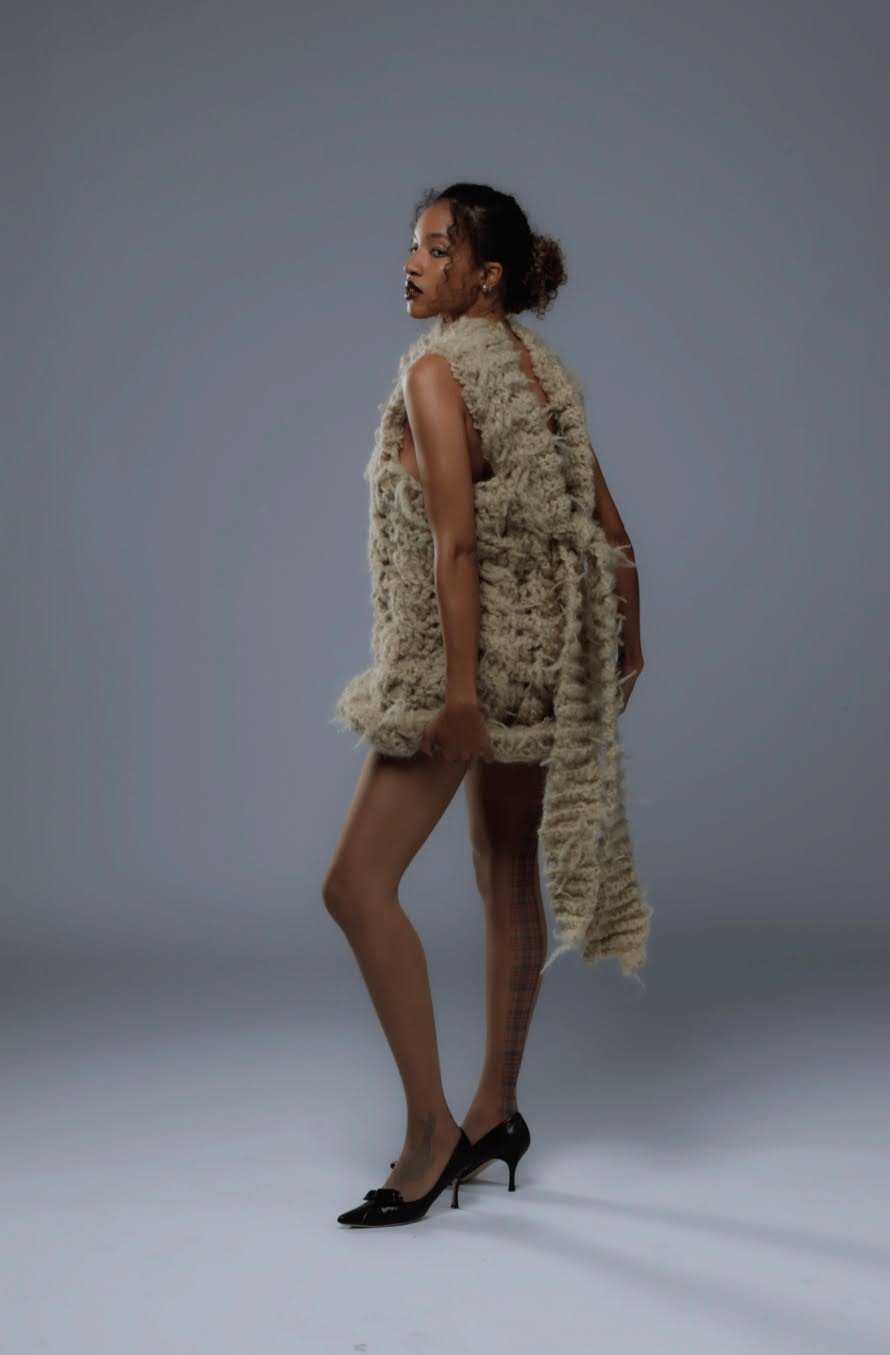
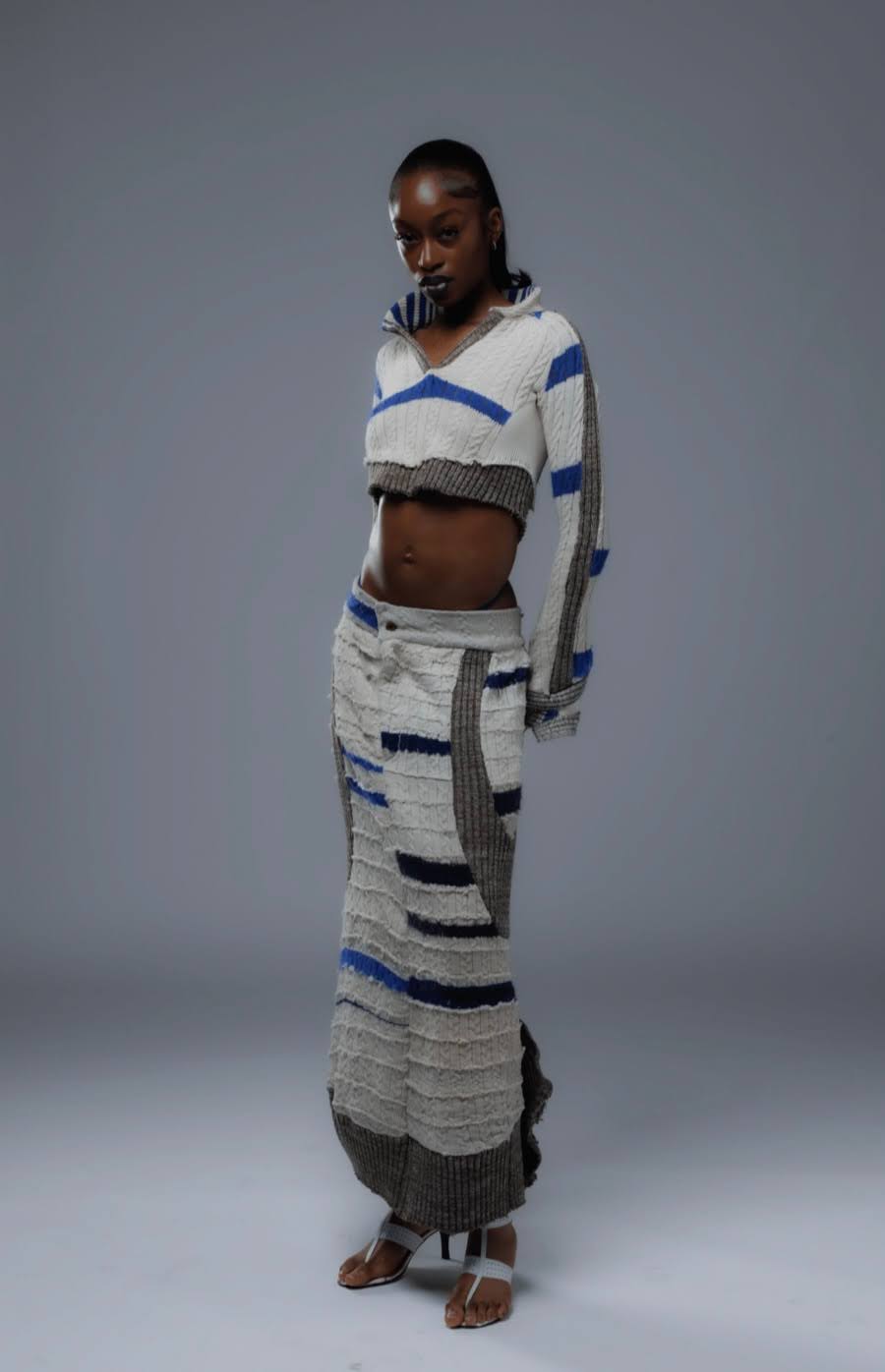
For texture, I used synthetic Marley hair as a nod to precolonial West African hairstyles and the Dysphoric beauty standards, I was also exploring. I used fish skin leather and silicone bathroom sealant for detailing, and sublimation printing was applied extensively throughout the work.
Inspiration is essential for a fashion designer. Where would you say your inspiration comes from?
Precolonial West African ways of dressing and garment construction mixed with traditional tailoring and images of my dad in the 70s and 80s have always been inspiration for silhouette, proportions and styling references. The aunties and uncles in my local area (Catford) know how they layer, mismatch patterns and style pieces together.
Another inspiration of mine is my elder sister and how she dresses when she gets ready for her corporate job. Her main style inspirations are the Yuppies (young urban professionals) of the 1980s and 1990s, which have always fascinated me.
What’s next for you?
I want to continue developing the work I began in my final year and explore just how far I can push the concept of “Imported Traditions,” as this is just the beginning. There is still much to uncover about the connections between Europe and West Africa. I also hope to find roles that allow me to experiment with my knitting and weaving construction skills, as I know I still have a lot to learn. The culture shaped by first- and second-generation Caribbean and African communities is vibrant and diverse — the fashion industry must represent it with authenticity and respect.
Zainab Mansary
Joining the esteemed ranks of designers like Bianca Saunders and Martine Rose, your work contributes to a meaningful conversation about masculinity. What does masculinity mean to you, and how do you express it in your collection?
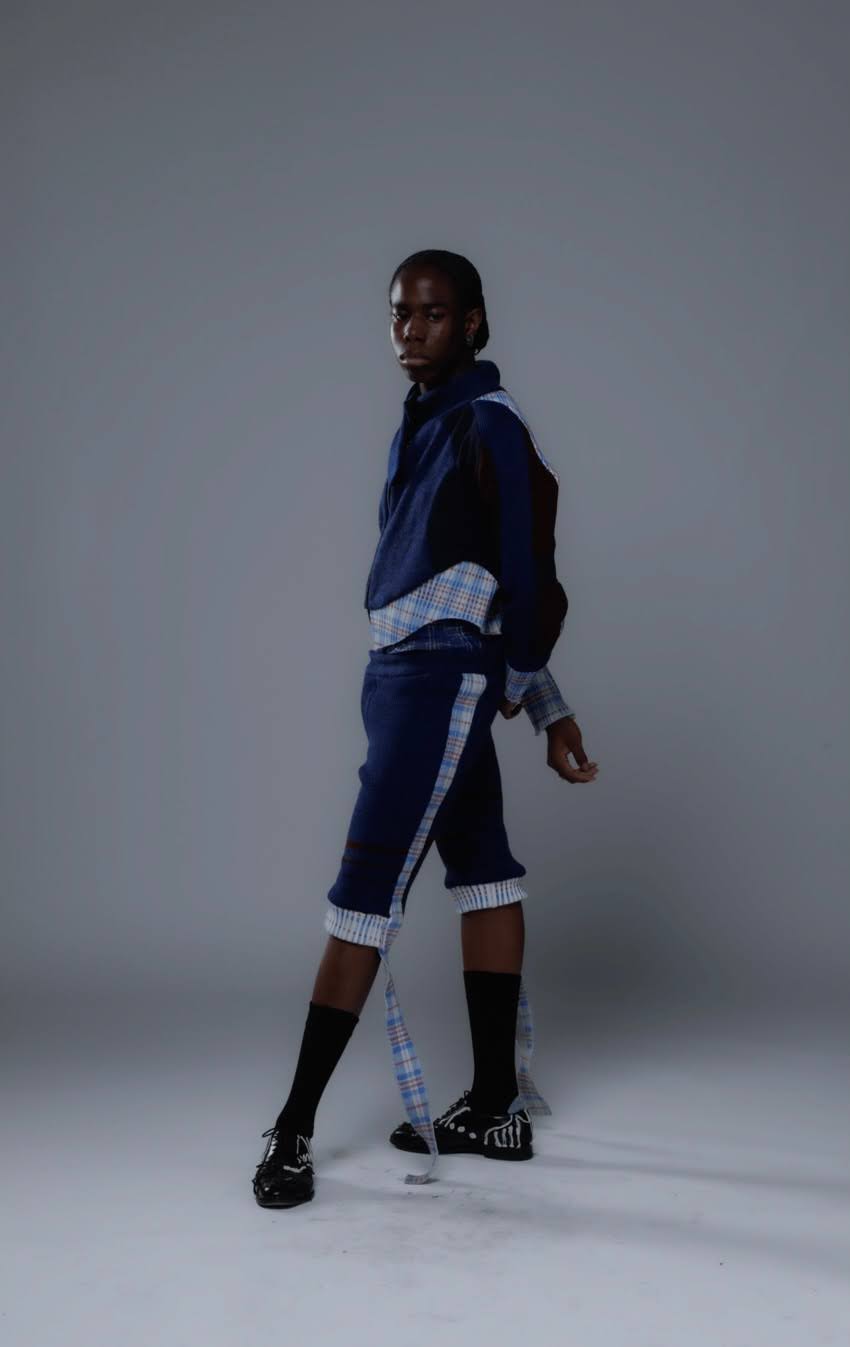
My collection addresses the effects of black men's mental health due to the conflict of identity during migration. Travelling from look to look I took both the vivid conversations and images I gathered during my first visit to Sierra Leone which allowed me to connect with the young boy and girl my parents once were growing upbetween the hustling streets of Freetown while directing my message and intention around how a black woman identity does change during migration, just like my fathers.
Through the intensive selection of casting I wanted to embody not only the periods of migration and travel that mirrored the young man who left Sierra Leone during a devastating time in the country but the beautiful range of black men’s experiences referenced in the silhouettes which were intentionally designed around models form, walking down the runway. Highlighting that black men’s mental health does not come in one image.
You explore different printing techniques, such as cyanotype and tie-dye, in the collection. Could you walk us through your creative process and explain why you chose these techniques?
My journey never starts in a sketchbook or on a mannequin for me. Conversations with people who influence my concepts and storytelling, such as my mother and family in Sierra Leone, inspire what I want to say in my work. They challenge my why: the silhouettes, colours, and primary research.
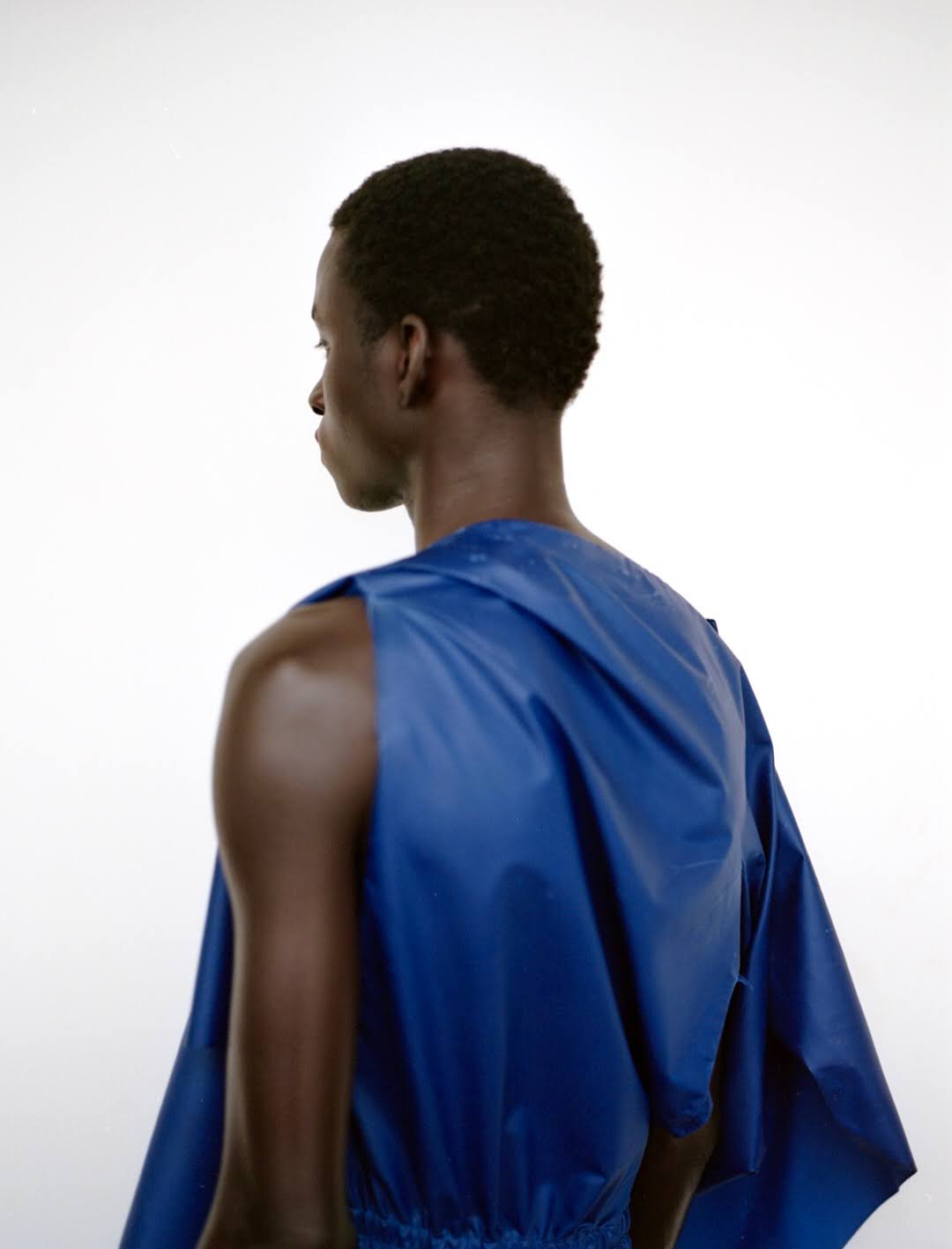
I have used a range of print and developed textiles across my collection. Cyanotype to capture a unique palette of blues which sits across my collection. Capturing the photos which are in the zine I created from my first trip to Sierra Leone. Re-imagining the tie-dyes that I witnessed being done in Makeni Town. While experiencing the celebration of Dutch Wax Print, I was aware of its historical exploitation, and I wanted to create a contemporary response that disrupted the traditional outcome, also in my UV Printing.
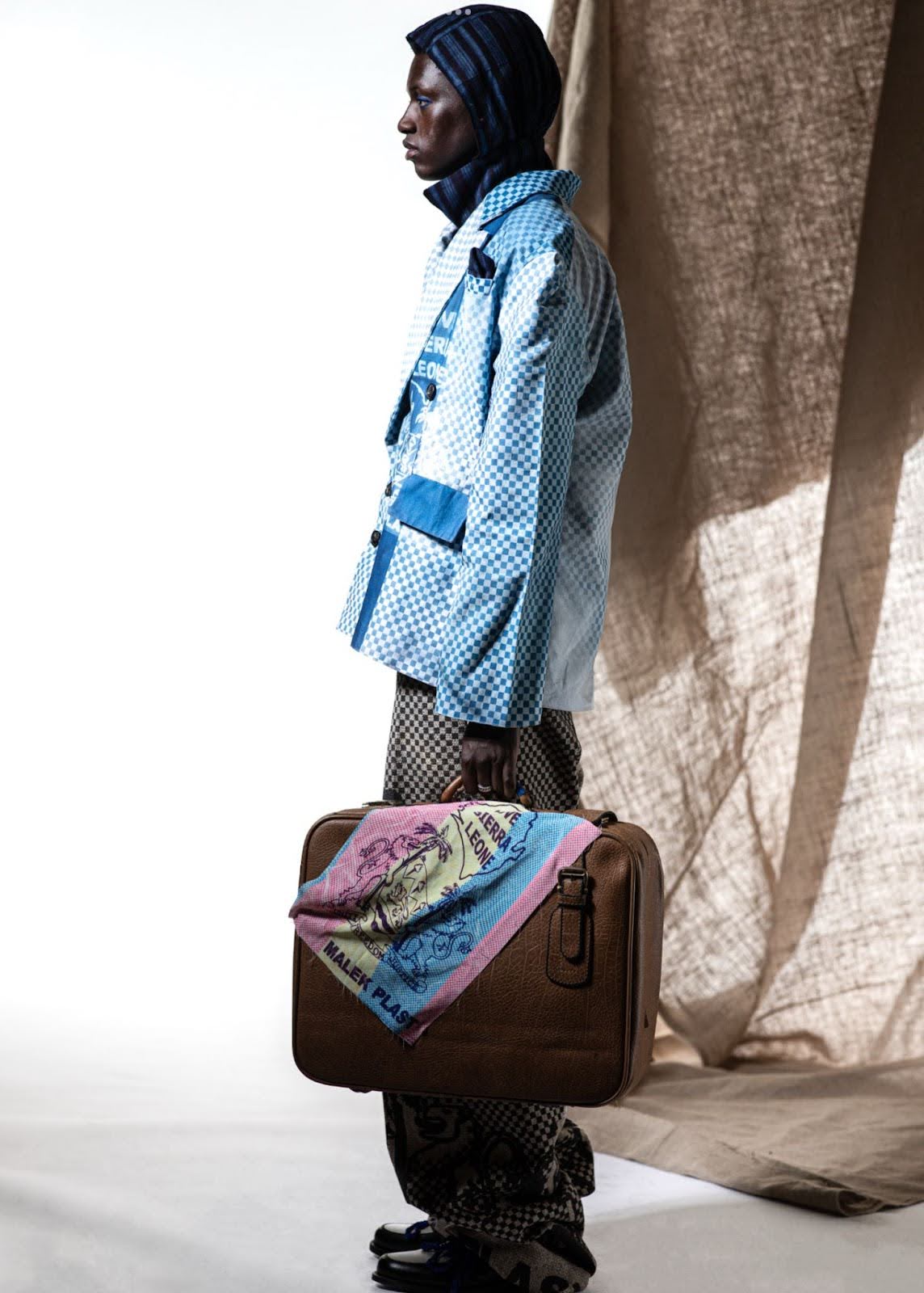
Sierra Leone and South London may seem like different worlds. What aspects of both cultures have helped you feel grounded?
Most definitely the hustle culture. My parents have always worked. Until I visited Sierra Leone last year, I didn’t understand to what extent. Seeing the young boys and girls work from as young as 5 years old just to help feed their families. I remember the stories my mum and dad would tell about the small jobs they would take on while studying to help their parents out, selling Palm oil on the side of the road. My parents brought that same mindset when moving to London. South London is full of culture but also hustle. They have worked every chance they could since moving to Europe and didn’t leave that mindset behind. That’s what keeps me grounded.
What’s next for you?
I want to go home, back to Sierra Leone. Continuing my research and building my visual archive of Sierra Leone. I would like to advance my studies and pursue a Master's degree in Fashion Design, with a focus on Menswear. My BA allowed me to build a foundation in my knowledge of print and texture. I want to continue to apply this to the body.
GIDA © 2025